

The future of the insights hub
A shared way to see the housing system
The Future Hub transforms housing and homelessness data into a shared decision space, where communities can see the system they’re in, test the futures they want, and learn together how to move from today’s reality toward lasting stability.
We're working toward a future where homelessness is rare, brief, and non-recurring through systemic change and community empowerment.
Strengthening housing and homelessness data by working across agencies and communities to fill gaps, align definitions, and improve accuracy over time.
More powerful insights
Better data sources
Continuously improving analysis and visual tools as data evolves, so insights stay relevant, transparent, and grounded in real conditions.
Scenario modeling
Tests how proposed interventions may change housing availability, affordability, and homelessness outcomes over time.
A system told through connected landscapes
The future Insights Hub is organized around a sequence of connected "landscapes," each building on the one before it to tell a coherent story about housing and homelessness
Population establishes the context: who lives in a place and the baseline conditions within which housing must be understood.
Homelessness Landscape
Population Landscape
Examines homelessness beyond what's visible through Point-in-Time counts, including sheltered and unsheltered populations.
Housing Gap
Aligns households and housing units across cost bands to reveal where shortages occur at specific affordability levels.
Housing Landscape
Examines housing supply across cost levels and whether units are available at prices households can realistically afford.
Scenario Modeling
Interactive tools to explore how housing projects and interventions affect availability and affordability over time.
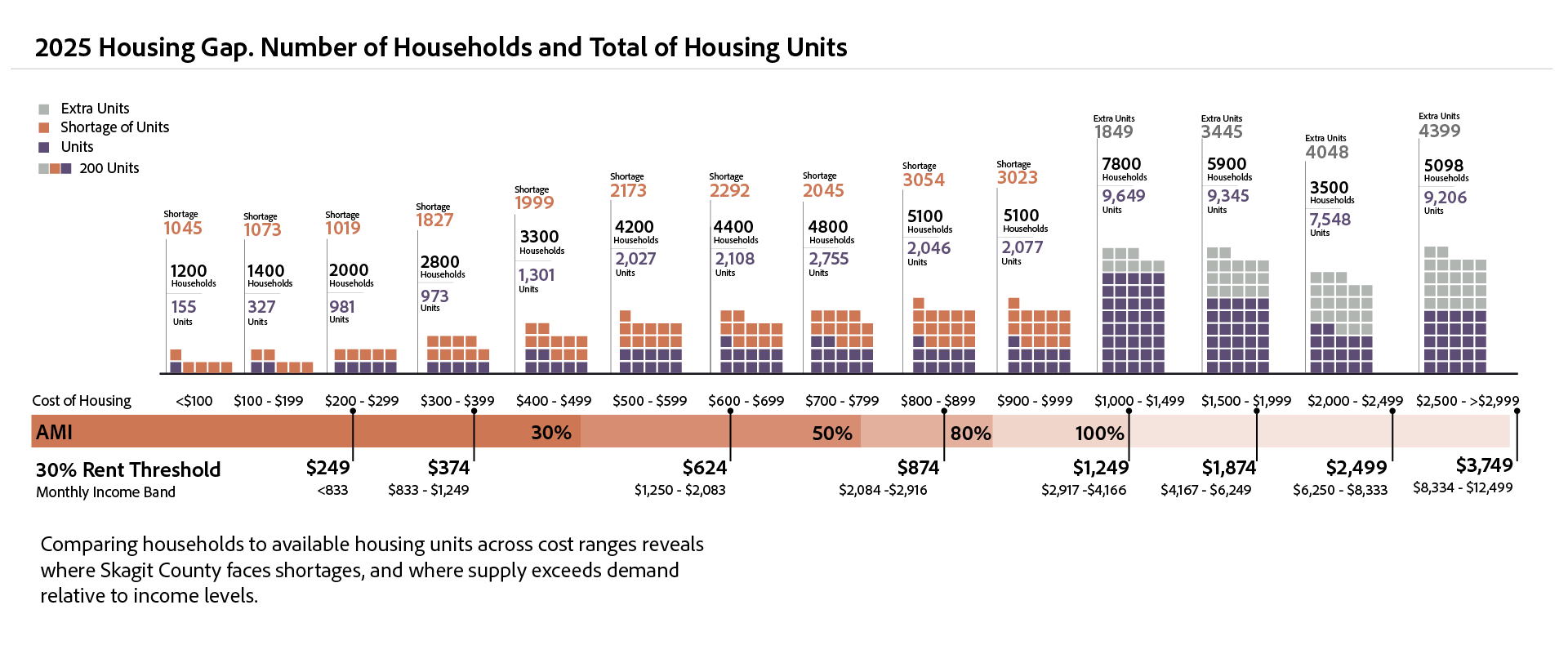
Making the housing gap visible
By bringing population demand and housing supply into a shared structure and aligning them by cost and income, the Housing Gap shows where shortages exist and where supply exceeds what households can afford. This view reveals that housing gaps are concentrated at specific cost levels, rather than evenly spread across the market.
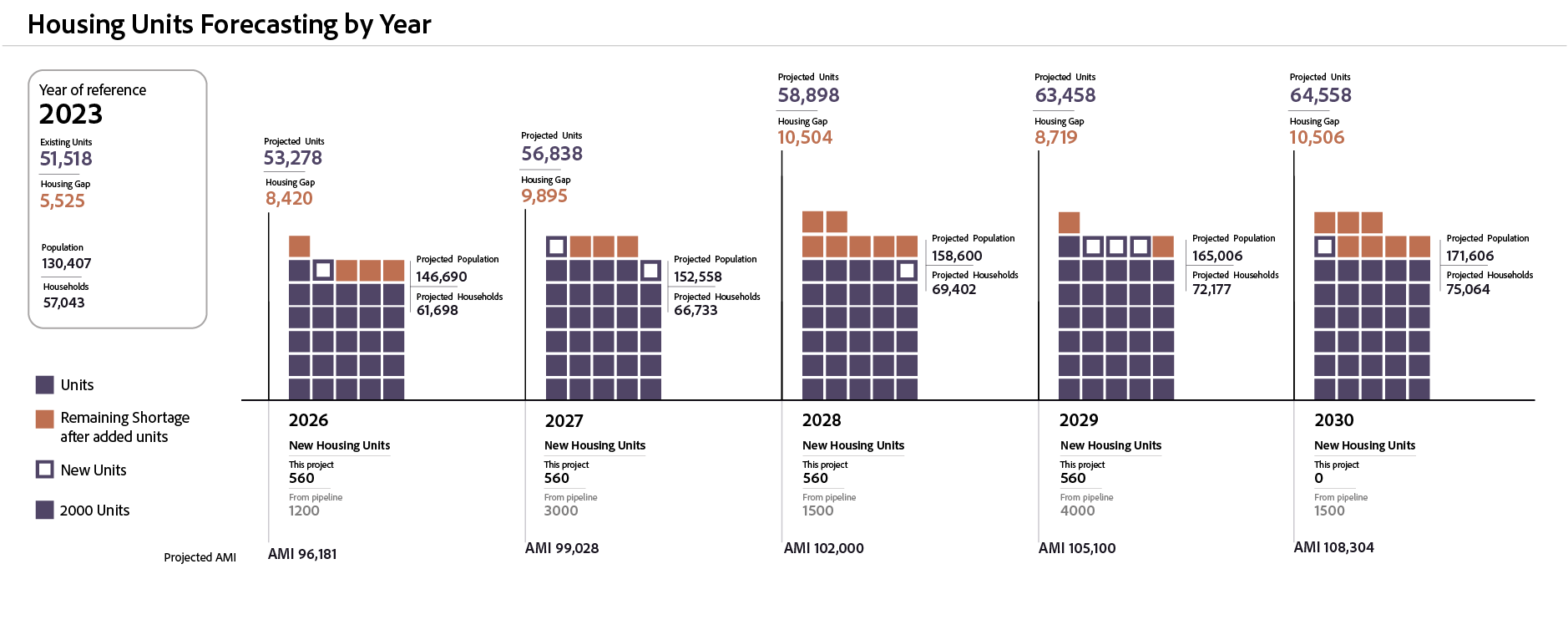
Understanding how interventions change the gap over time
Future forecasting tools allow users to explore how housing projects and interventions affect availability year by year. By connecting long-term projections with detailed views of the housing gap, the Hub helps communities see not only how much housing is added, but whether it addresses the parts of the system under the greatest strain.
What the future holds
Better data and clearer visualizations
The future Hub strengthens how public data is aligned and presented, reducing inconsistencies across sources and making complex housing information easier to interpret. Improved visualizations help users see patterns, relationships, and constraints that are difficult to grasp in tables or isolated charts.
Community-centered design
The Hub is being designed with and for communities, ensuring that it addresses real needs and provides actionable insights. User research and feedback sessions inform every aspect of the platform, making it more accessible and useful for diverse stakeholders.
Read the full Vision Report
Our work continues to evolve as we address the changing landscape of homelessness. Learn about our strategic vision for creating lasting systemic change and how we plan to scale our impact in the coming years.
Get involved
Lunous builds shared data infrastructure and insights to help communities understand and address housing and homelessness as connected systems.
Support this work and help build shared data for collective impact.
Volunteer
Donate
Contribute your skills to strengthen shared understanding across housing systems.
Talk to us
Let’s talk about your community, your questions, and what clarity could unlock.