

Making sense of homelessness
Homelessness is often explained through individual stories: addiction, mental illness, or personal crisis. While these experiences matter, they do not explain why some communities have far higher rates of homelessness than others.
At Lunous, we understand homelessness as the outcome of interacting systems, shaped primarily by housing availability and affordability relative to demand.
Homelessness emerges from a web of social, economic, and political conditions that interact in ways that are harder for us to see.
A systems view looks beyond individual circumstances to examine how larger forces interact. In the case of homelessness, this includes housing markets, wages, public policy, health systems, and social supports, all operating together.
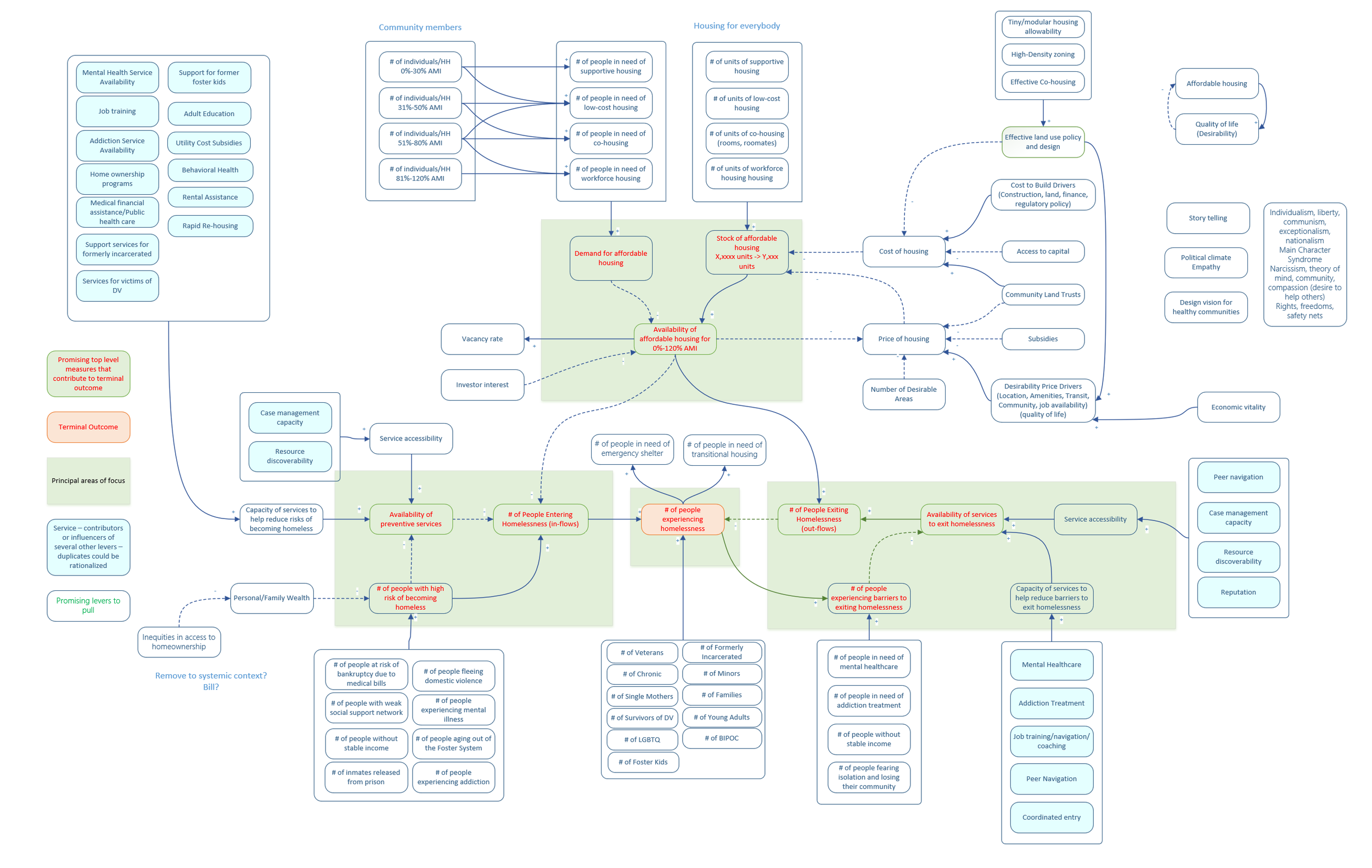
Systems shape how many people experience homelessness, how long they remain unhoused, and how easily they can return to stable housing.
The musical chairs analogy
Homelessness is not caused by people's problems alone; it occurs when common human setbacks collide with a system that does not have enough places to land.
Eight people walk in a circle. There are only seven chairs.
When the music stops, someone will lose, no matter who the players are.
One person might have a bad knee. Another might react more slowly. Someone else might hesitate.
It's easy to look at the person left standing and explain the outcome by pointing to their weakness. But that explanation misses the real cause.
The reason someone loses is not who they are, it's that there weren't enough chairs.
If there were enough chairs, no one would lose — even if some players were slower or injured.
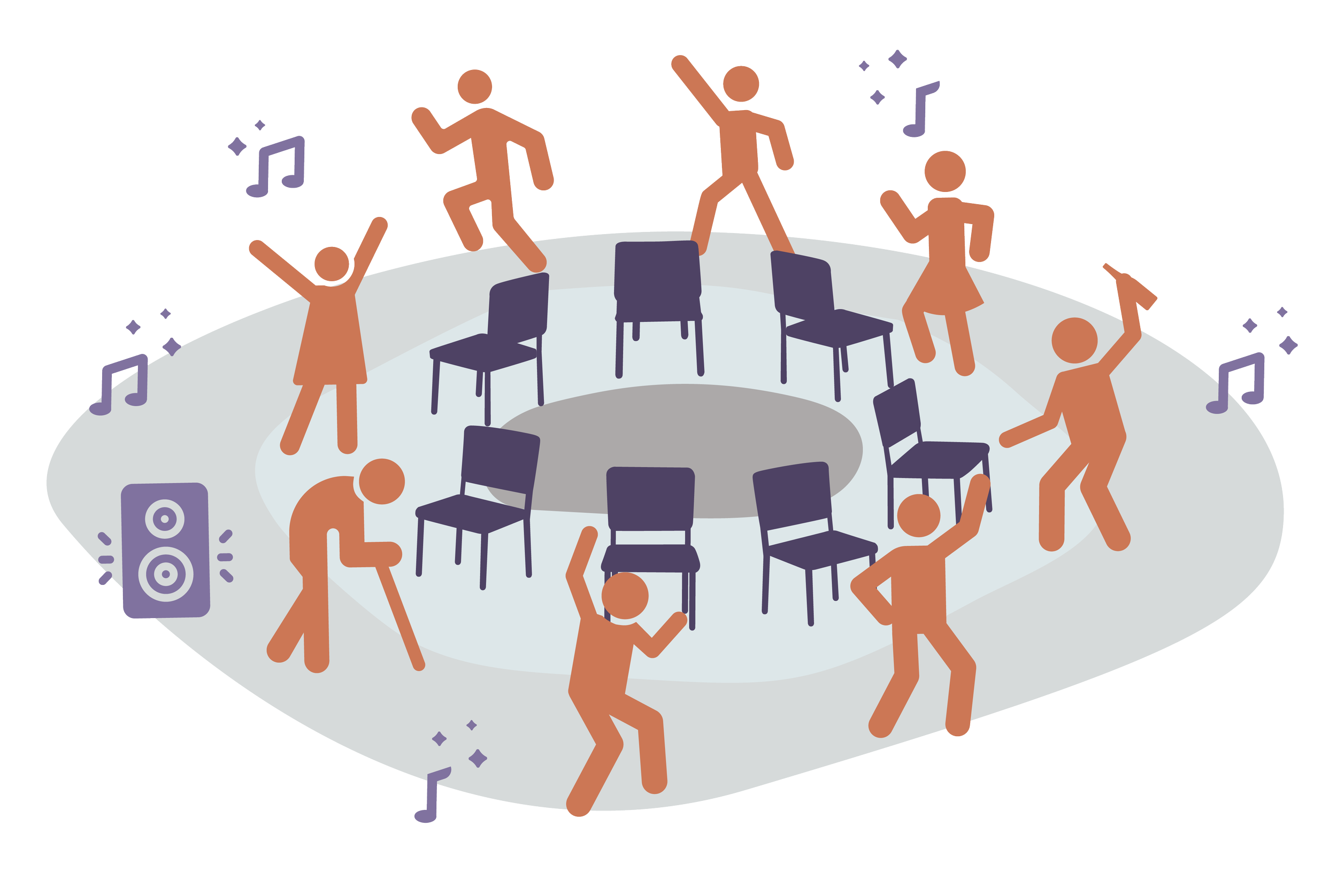
When housing shortages exist, households with the least economic strength and social capital are the first to fall into homelessness
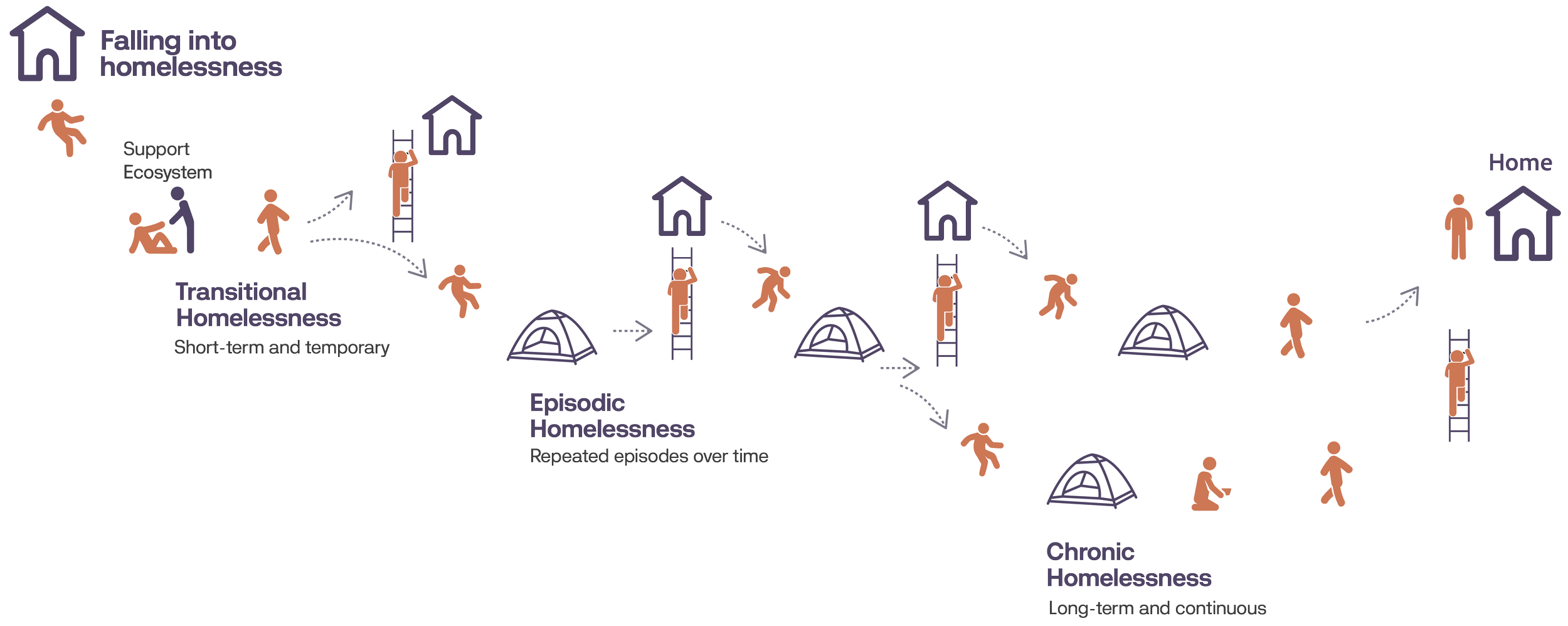
Individual Experiences Matter
Health challenges
Substance use
Job loss or family disruption
Domestic violence
These factors affect who is vulnerable to becoming homeless.
Systems Determine Outcomes
Housing availability
Affordability relative to income
Policy and zoning
Access to stable units
These factors shape how widespread homelessness becomes.
People exit homelessness when stable, affordable housing becomes accessible, often with supports that help sustain it.
Key factors that enable exit:
Availability of affordable and appropriate housing units
Rental assistance or income stabilization to make housing affordable
Housing navigation and case management to overcome administrative barriers
Supportive services (healthcare, behavioral health, employment) when needed
Landlord participation and tenant protections that reduce re-entry risk
Housing instability is the difficulty of maintaining stable housing over time. A job loss, medical expense, or financial shock can quickly put any household at risk of losing their home.
Home
A safe, secure, and stable place where a person has agency over their space, can meet basic needs, and participate in daily life with dignity.
Stability
The ability to stay over time without being forced to leave daily.
Basic functionality
A place to sleep, store belongings, and manage daily needs.
Security
The ability to stay over time without being forced to leave daily.
Recognition
Accepted by the community or system as a legitimate living arrangement
Privacy
A degree of separation from others that allows rest and dignity.
Dignity
Supports mental well-being, self-respect, and social participation
Homelessness varies by place and by local housing conditions
Rates of homelessness differ widely from one community to another. Even neighboring counties can experience very different levels.
These differences tend to follow local housing conditions: the cost of rent, the availability of homes, and how housing markets function in each place.
Understanding these local dynamics helps explain why homelessness looks different across communities, and why responses must consider the housing systems people live within.

Lunous aggregates and visualizes housing and homelessness data
No single dataset captures the full housing system. Counts of people experiencing homelessness, housing costs, vacancy rates, and household income are often collected separately, making it difficult to understand how they interact.
Lunos brings these data together using publicly available information from the U.S. Department of Housing and Urban Development (HUD), the Washington State Department of Commerce, and the U.S. Census Bureau’s American Community Survey (ACS), among others, to make the system visible and help communities move beyond isolated statistics toward shared understanding.
We are committed to continually expanding and improving our data sources as new, high‑quality information becomes available.
We helps communities by
Grounding decisions in shared evidence
Base interventions on comprehensive data rather than assumptions
Building understanding through data
Recognize how different factors dominate in different communities
Seeing tradeoffs more clearly
Understand how different policy choices affect housing outcomes
Aligning conversations across sectors
Create common language between housing, homelessness, and policy stakeholders
Get involved
Lunous builds shared data infrastructure and insights to help communities understand and address housing and homelessness as connected systems.
Support this work and help build shared data for collective impact.
Volunteer
Donate
Contribute your skills to strengthen shared understanding across housing systems.
Talk to us
Let’s talk about your community, your questions, and what clarity could unlock.